
Basics of Static Electricity

On a molecular level, the outer electrons surrounding the nucleus can be removed and transferred between atoms, leading to an imbalance of electrical charge known as static electricity. When an atom gains an extra electron, it becomes negatively charged, while the loss of an electron results in a positively charged atom. In non-conductive materials such as plastic, paper, rubber, and glass, these electrons cannot return to their original atoms. There are three primary methods through which static electricity can be generated, resulting in this phenomenon.
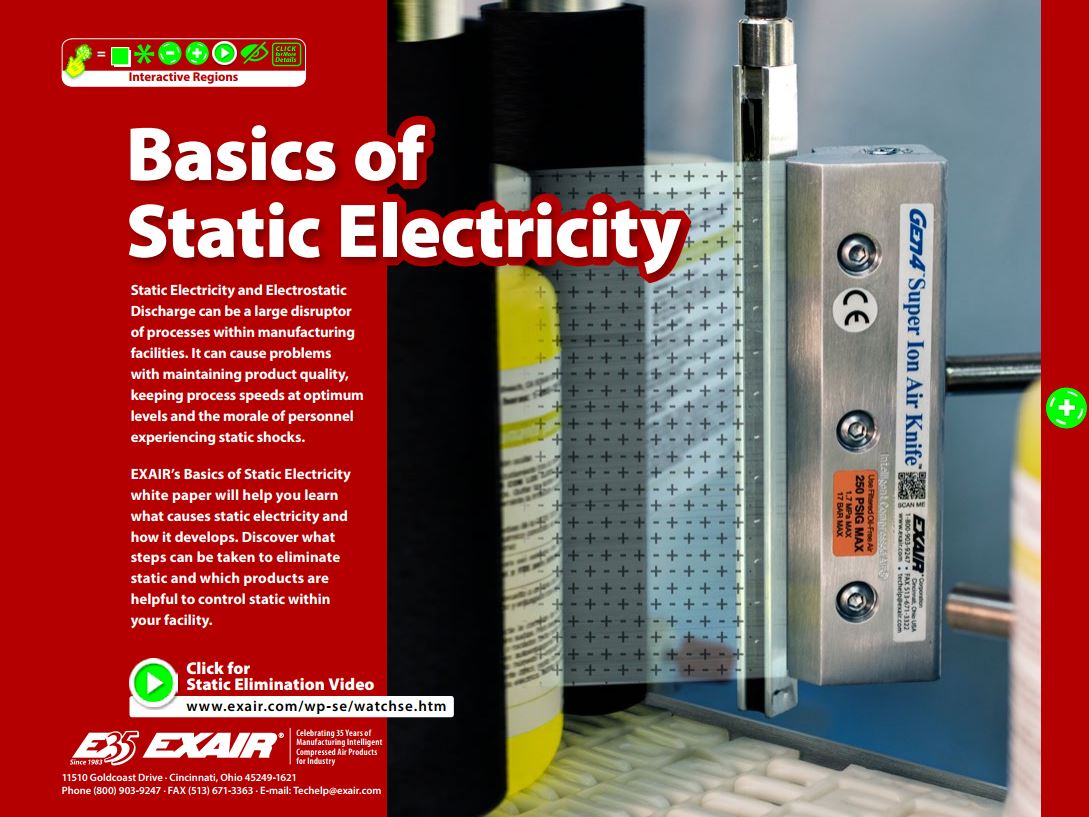
Contact — When objects collide, electrons can be transferred between their surfaces, with the amount of electrons exchanged depending on the specific triboelectric materials involved. In the case of plastic bottles or trays coming into contact on conveyor belts, static electricity can be generated quite easily.

Friction — When two materials are peeled apart, the electrons may not return to their original molecules, resulting in the creation of static electricity. This effect is especially prevalent with adhesive tapes and protective films, which possess larger surface areas that facilitate charge buildup. For example, peeling the backing from labels can generate a static charge that may malalign the labels or cause jams during the application process.

Separation — Static forces are often generated when two non-conductive surfaces are rubbed together, leading to the accumulation of electric charges. The friction created as these materials slide against each other increases the static charge, exemplified by the phenomenon observed when a balloon is rubbed on hair. With each additional rub, the static force intensifies, enabling the balloon to adhere to surfaces like walls. This effect is also evident when layers of material are stacked or when they move over rollers, highlighting the significance of friction in generating static electricity.

The generation of static electricity is influenced by the degree of contact, detachment, and friction between surfaces; increased interaction leads to a higher static charge. Even after static is discharged from a surface, it can accumulate through the same processes. Therefore, effective control of static electricity depends on both the treatment methods employed and the specific locations designated for its removal.

Humidity is another critical factor in static charge generation. Issues related to static electricity are often more pronounced during the winter months when the air tends to be drier. Lower relative humidity facilitates the easier and more potent development of static charges, which is why winter is commonly referred to as “static season.” A familiar example of this phenomenon occurs when one walks across a carpet and experiences a static shock upon touching a metal object, such as a door handle.

If you are experiencing static issues, or anything regarding EXAIR and our products, please do not hesitate to reach out. We offer a full line of Static Elimination products to suit your needs!

Jason Kirby
Application Engineer
Email: jasonkirby@exair.com
Twitter: @EXAIR_jk

The Generation of Static Electricity

EXAIR published a white paper, Basics of Static Electricity, explaining what causes static electricity; how it is generated; and steps to eliminate it. You can get this paper HERE and start removing static issues from within your plant or process.

In this blog, I would like to expand on the subject of how static can be generated.  On a molecular scale, the outer electrons that are orbiting the nucleus of an atom or molecule can be “stripped” and redistributed from one atom to another.  This will cause an electrical charge imbalance called static.  An additional electron will create negatively charged static, while atoms losing an electron will create positively charged static.  With non-conductive materials like plastic, paper, rubber, glass, etc., the electrons cannot move back to the original atom. There are three common methods of static generation that will cause this phenomenon to occur.  I will explain each one in brief detail below:

Contact

Contact: Whenever objects hit each other, electrons can be passed to or received from the surface of another object. The number of electrons being transferred is based on the type of triboelectric material.  But, with plastic bottles or trays bumping into each other on conveyor belts, static can be generated relatively easily.

Detachment

Detachment: When one material is separated from another by peeling, electrons may not be able to return to the original molecule.  Because of their larger surface areas, adhesive tape and protective films are common for generating static charges by detaching.  As an example; when the backing material is being removed from labels, the static will cause the labels to be misaligned or cause jams.

Friction

Frictional: This is one of the most common reasons for generating large static forces. It is caused by two non-conductive surfaces being rubbed together.  The amount of force being applied to the material as it slides back and forth will create higher static charges.   As an example, it is noticed when you rub a balloon on your hair.  The more times that you rub the balloon against your hair, the stronger the static forces, allowing the balloon to “stick” to the wall.  It is also noticed as sheets of material are stacked or run over rollers.

Static tends to propagate.  The more contact, detachment, and friction that occurs, the higher the static charge.  Even after the static charge is removed from the surface, it can regenerate using the same mechanisms described above.  So, controlling the static can be determined by the type of treatment as well as the location for removal.

Another variable that affects static generation is humidity.  Most process problems are noticed during the winter months as the ambient air is drier.  With a lower relative humidity, static electricity can develop easier and with greater strength.  We always refer to winter as “static season.”  You may even notice this when you walk across the carpet and get zapped by touching a door handle. 

EXAIR manufactures a large line of Gen4 Static Eliminators to remove this static nuisance.  From now until March 31st, 2024, EXAIR will be giving away a free AC Sensor, a $76.00 value, as a promotional item with a qualified purchase of the Gen4 Static Eliminators.  If you would like to discuss your application and potential static issues, you can contact an Application Engineer at EXAIR.  We will be happy to help.

John Ball
International Application Engineer
Email: johnball@exair.com
Twitter: @EXAIR_jb

Generation of Static Electricity

EXAIR published a white paper, Basics of Static Electricity, explaining what causes static electricity; how it is generated; and steps to eliminate it. You can get this paper HERE and start removing static issues in your plant or process.

In this blog, I would like to expand on the subject of how static can be generated.  On a molecular scale, the outer electrons that are orbiting the nucleus can be “stripped” and redistributed from one atom to another.  This will cause an electrical charge imbalance called static.  An additional electron will create negatively charged static, while atoms losing an electron will create positively charged static.  With non-conductive materials like plastic, paper, rubber, glass, etc., once dislodged the electrons cannot move back to the original atom without subsequent intervention. There are three common methods of static generation that will cause this phenomenon to occur.  I will explain each one in brief detail below:

1 Contact:  Whenever objects hit each other, electrons can be passed to or received from the surface of another object. The number of electrons being transferred is based on the type of triboelectric material.  But, with plastic bottles or trays bumping into each other on conveyor belts, static can be generated relatively easily.

2 Friction: This is one of the most common reasons for generating large static forces. It is caused by two non-conductive surfaces being rubbed together.  The amount of force being applied to the material as it slides back and forth will create higher static charges.   For example, it is noticed when you rub a balloon on your hair.  The more times that you rub the balloon against your hair, the stronger the static forces become, allowing the balloon to “stick” to another non-conductive surface.  For example, within an industrial application, friction type static generation is also observed when sheets of material are stacked, sliding across one another as they move into place.

3 Detachment:  When one material is separated from another by peeling, electrons generally do not return to the original molecule.  Because of their larger surface areas, adhesive tape and protective films are common for generating static charges through the detachment method.  For example; when the backing material is being removed from labels, the static will cause the labels to be misaligned or cause jams within the rollers and guides in a machine.

Static tends to propagate.  The more contact, detachment, and friction that occurs, the higher the static charge.  Even after the static charge is removed from the surface, it can regenerate using the same mechanisms described above.  So, controlling the static can be determined by the type of treatment as well as the location for removal.

Another variable that exacerbates static generation is humidity.  Most process problems are noticed during the winter months as the ambient air is drier.  With a lower relative humidity, static electricity can develop easier and with greater strength.  We always refer to winter as “static season.”  You may even notice this when you walk across the carpet and get zapped by touching a door handle. 

Gen4 Static Eliminators

EXAIR manufactures Gen4 Static Eliminators to remove all static nuisance that may likely be plaguing your processes.  Beginning January 1st, 2024, EXAIR will be giving away a free AC Sensor, a $76.00 value, as a promotional item with a qualified purchase of the Gen4 Static Eliminators.  If you would like to discuss your application and potential static issues, you can contact an Application Engineer at EXAIR.  We will be happy to help.

John Ball
International Application Engineer
Email: johnball@exair.com
Twitter: @EXAIR_jb

Static Electricity and How it is Generated

EXAIR published a white paper, Basics of Static Electricity, explaining what causes static electricity; how it is generated; and steps to eliminate it. You can download this paper HERE, and begin to remove the static issues in your plant or process.

In this blog, I would like to expand on the subject about how static can be generated.  On a molecular scale, the outer electrons that are orbiting the nucleus can be “stripped” and redistributed from one atom to another.  This will cause an electrical charge imbalance called static.  An additional electron will create negatively charged static while atoms losing an electron will create a positively charged static.  With non-conductive materials like plastic, paper, rubber, glass, etc., the electrons cannot move back to the original atom. There are three common methods of static generation that will cause this phenomenon to occur.  I will explain each one in a brief detail below:

Contact

Contact – Whenever objects hit each other, electrons can be passed to or received from the surface of another object. The number of electrons being transferred is based on the type of triboelectric material.  But, with plastic bottles or trays bumping into each other on conveyor belts, static can be generated relatively easy.

Detachment

Detachment – when one material is being separated from another material by peeling, electrons may not able to return back to the original molecule. Adhesive tape and protective films are prevalent in generating static charges by detachment because of the larger surface areas.  As an example; when the backing material is being removed from labels, the static will cause the labels to be misaligned or cause jams.

Frictional – This is one of the most common reasons for generating large static forces. It is caused by two non-conductive surfaces being rubbed together.  The amount of force being applied to the material as it slides back and forth will create higher static charges.   As an example, it is noticed when you rub a balloon on your hair.  The more times that you rub the balloon against your hair, the stronger the static forces, allowing the balloon to “stick” to the wall.  It is also noticed as sheets of material are stacked or running over rollers.

Static tends to propagate.  The more contact, detachment, and friction that occurs; the higher the static charge.  Even when the static is removed from the surface, static charges can still regenerate by the same mechanisms above.  So, controlling the static can be determined by the type of treatment as well as the location for removal.

Another variable that affects static generation is humidity.  Most process problems are noticed during the winter months as the ambient air is drier.  With a lower relative humidity, static can develop easier and with greater strength.  We always refer to winter as static season.  You may even notice this when you walk across the carpet and get zapped by touching a door handle. 

Production problems can occur like dirty surfaces, tearing, alignment, jamming and shock to staff with static.  EXAIR has a number of Static Eliminators to remove these process snags that can cost your company money.  You can contact an Application Engineer at EXAIR to discuss any static issues that are occurring.

John Ball
International Application Engineer


Email: johnball@exair.com
Twitter: @EXAIR_jb