Compressed air powers tools, equipment, and cleaning processes in many facilities—but it can also cause serious injuries, damage equipment, and disrupt operations when used improperly. Here is a concise look at the main hazards and the practices that reduce risk.
Common compressed air hazards
- High-pressure injection and flying debris: Air blasts can propel chips and dust into eyes and skin; air can also enter the body through cuts or openings and cause life-threatening injury.
- Excessive noise: Blow-off and open pipes can exceed safe sound levels, contributing to permanent hearing loss and making communication harder.
- Whipping hoses and failed fittings: A loose or damaged hose can detach and strike workers with significant force.
- Contaminants in the air stream: Oil, water, and particulates can affect product quality, degrade tools, and create health risks in certain applications.
OSHA note: blow-off pressure limits
OSHA Standard 1910.242(b) requires compressed air used for cleaning to be reduced to less than 30 PSI at the nozzle when dead-ended (blocked), and to be used with effective chip guarding and appropriate PPE. Meeting this requirement is a baseline for a safe compressed air program.
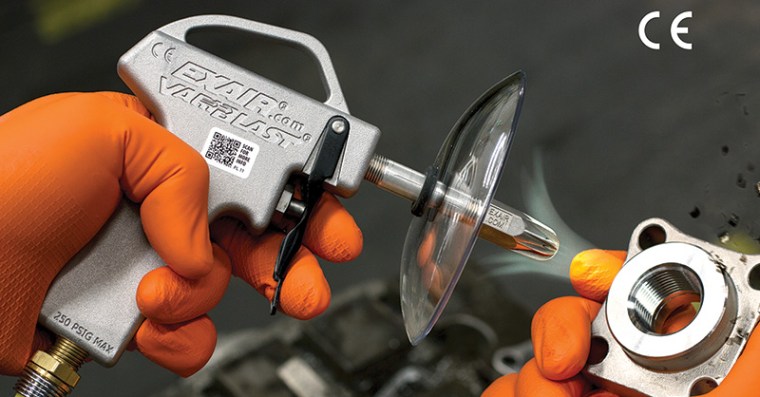
Many facilities meet these standards by using engineered nozzles and safety air guns (for example, from EXAIR or similar manufacturers) that limit dead-end pressure, reduce noise, and improve blow-off efficiency.
Best practices checklist
- Use engineered nozzles/air guns: Replace open pipes and improvised nozzles; choose designs that limit dead-end pressure and reduce noise.
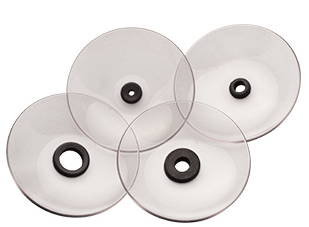
- Control debris: Use chip guards/shields and direct blow-off away from people and walkways.
- Manage hoses: Secure connections, route hoses to prevent kinks and trip hazards, inspect routinely, and use whip checks where appropriate.
- Wear the right PPE: Eye protection is essential; add hearing protection where noise is elevated; use gloves/protective clothing as the task requires.
- Follow safe procedures: Never point compressed air at anyone or use it to clean clothing; depressurize lines before maintenance; train operators and post clear signage.
- Maintain the system: Keep filters/dryers/lubricators serviced and repair leaks to improve safety and reduce energy waste.
The Bottom Line
Compressed air is essential—but it is not risk-free. When you pair OSHA-aligned pressure control with engineered tools, hose management, PPE, training, and routine maintenance, you reduce injuries, cut down time, and keep operations running safely.
Neal Raker, Application Engineering Manager
nealraker@exair.com