
American Machine Tools – Yesterday and Today

Early Bullard Machine

I just came back from the IMTS show where I saw lots of machine tools and new innovations. Having been in the industry for 40 years, I could not help but think of all the company names that I was familiar with over the years that are no longer the stars of the show. Names like Blanchard, Bliss, Bullard, Le Blonde, Kearney & Trecker, Acme Gridley have been become more or less memories of Americana.What is most interesting to me is the history of these companies and their founders. Do a little research on the internet and you will find their founders were innovators and entrepreneurs who gave birth to the term “Yankee Ingenuity” The machine tool industry is what propelled the American economy. And with unfettered freedom to pursue and develop an idea, America became the world’s leading economy.

Some companies may have come and gone, but American exceptionalism still persists despite all the social and political discourse. This was quite evident from all the exhibits at the show. I witnessed vision systems that control the process to perfection, tool bits of exotic materials improving machinability, laser cutters capable of cutting the shell of an egg without breaking it. It was obvious to me, that with american ingenuity, what were challenges are now opportunities.

Modern Bullard Machine

We at EXAIR would like the opportunity to assist you with your compressed air challenges. Give one of our application engineers a call 1-800-903-9247 and experience what we can do for you.

Joe Panfalone
Application Engineer
Phone (513) 671-3322
Fax   (513) 671-3363
Web: www.exair.com
Twitter: www.twitter.com/exair_jp
Facebook: http://www.facebook.com/exair
Social Media and the Age of Technology

Thirty years ago I was at a Sears store shopping (ugh) with the wife. I noticed a young pre-teen playing with some new contraption called a computer. It was then I had an epiphany. He was 12 years old and I was 35. In ten years he will be entering the job market and competing for my job. Time and time again I witnessed middle-aged employees being replaced with younger talent with newer ideas. I vowed that would not happen to me so I delved into the world of computers.

Those were the days of DOS and green monochrome screens. If you had 64 kilobyte of memory you had a screaming machine. The functionality of computers back then was limited but I sensed it would mature as did the calculators. I remember trading in my old mechanical Comptometer for an electronic calculator. All it could do is add, subtract, multiply, and divide which was a leap over the Comptometer. Todays calculators can do complex math and are the size of a credit card.

I was right in that computers evolved into complex machines that have permanently permeated our lifestyles. The rate at which the technology is changing is overwhelming. Either you go with the flow or you get left behind. As I sit here in my cubical, I marvel at what I can do with my computer and wonder how I ever was able to do my job before computers.

Today, social media is in its infancy stage as was the computer. While it may be difficult to envision how to integrate this into your business model and question the economics of implantation, keep in mind that it is evolving. I believe Facebook, Twitter, LinkedIn, and the like are platforms to get the masses engaged. Once engaged, there will be a demand for specialized features and there will be a migration to new platforms and networks.

It’s happening as we speak.  Doximity, a Facebook style social networking tool for physicians has come on the scene. This allows doctors to collaborate on a secure network, overcoming the limitations of their clinics software. As a core part of their strategy, many businesses are developing a network of connections to suppliers which moves communications into real-time.

Times are changing and at break neck speed. EXAIR is doing its best to keep up with new forms of communication via the internet, email, live chat, and social media.

Joe Panfalone
Application Engineer
Phone (513) 671-3322
Fax   (513) 671-3363
Web: www.exair.com
Twitter: www.twitter.com/exair_jp
Facebook: http://www.facebook.com/exair

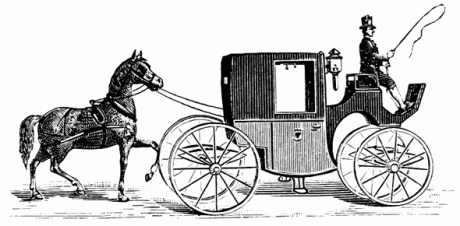
Don’t Get the Cart Before the Horse

I’ve recently taken up a new hobby – competitive shooting. As with all hobbies it involves $$$. Ammunition is especially expensive. To become competitive requires trigger time and many rounds of ammo. So I got the bright idea of reloading my own. I purchased all the equipment to mold and reload them, then I came to a major roadblock…availablity of lead to melt down.

When I was a kid, I molded fishing sinkers. Service stations were more than glad the give me their old wheel weights. Things have changed since I was a kid. Due to government regulations they have to document them as hazardous waste. Even the scrap yards are reluctant to sell to me. So the moral of the story is to think a project through to its end before executing.

The same moral applies to manufacturing. I am sure some of you have experienced getting a new piece of equipment only to find out that it drained your compressed air system. Someone did not think the project through to its end before committing. Now you are stuck with a piece of capital equipment that you have to find a way to use without shutting down the rest of the plant.

There is an option to consider before buying a new compressor for added capacity.  Installing EXAIR engineered nozzles throughout the plant to reduce wasteful air consumption. These have been proven to dramatically reduce demand on your compressor system.

As an example, an engine plant needed to reduce air consumption on their transfer lines. They acquired a new line from a sister plant and they ran out of air. They replaced all their open pipe and conventional nozzles with EXAIR engineered nozzles. With the newly acquired capacity, they not only were able to run the additional line, but were able to shut down a 100 horsepower air compressor.

EXAIR would like to help you save compressed air too. Give one of our application engineers a call 1-800-903-9247.

Joe Panfalone
Application Engineer
Phone (513) 671-3322
Fax   (513) 671-3363

Where Does Oil Come From?

In spite of some popular misconceptions, oil doesn’t come from dead dinosaurs. In fact, most scientists agree that oil comes from creatures the size of a pinhead. These one-celled creatures are called diatoms.  Follow this link to The Paleontological Research Institution for an interesting treatise on the subject.
With the recent push for alternative energy, the basic fact is that we will never be free of our dependency on oil. As far back to ancient times, before crude was discovered, oil was used. It just came from different sources like olive oil and in later times whale oil. Crude oil has more uses than powering our automobiles. Is is the essential component for many of our pharmaceuticals, plastics, and fertilizers.
Sustainability is not really that complicated if we just follow the laws of nature. Emulating the process that the diatoms create crude oil, agricultural waste (biomass) can be converted to fuel. Agriculture residues result from crop harvesting and processing. They include rice husk, bagasse, sugar cane tops and leaves, groundnut shells, cotton stalks and mustard stalks. Forest residues result from logging and wood processing. They include small trees, branches, tops and un-merchantable wood left in the forest.

A new report by Bloomberg New Energy Finance, states bio fuels have the potential to replace over 50 percent of the global demand for gasoline by 2030.  Furthermore, only 17.5 percent of the agricultural residue would be needed to overcome the global economy’s dependency on crude oil, the report believes.

EXAIR’s core competency is energy conservation in the form of conserving the use of compressed air. Our products are engineered to more efficiently perform blow off, cooling, vacuum, and non-contact ejection with less compressed air than conventional systems.
Give one of our application engineers a call 1-800-903-9247 to see how you can save the planet and use less compressed air.
Joe Panfalone
Application Engineer
Phone (513) 671-3322
Fax   (513) 671-3363
Web: www.exair.com
Twitter: www.twitter.com/exair_jp
Facebook: http://www.facebook.com/exair