Heavy Duty HEPA Vac Reduces Dust When Vacuuming

hepafam_collection
EXAIR Heavy Duty HEPA Vacuum Systems

When selecting the proper EXAIR vacuum system for an application, several details are considered by our Application Engineers.  For example:

Does the vacuum need to vacuum liquids or solids?

If the need is to vacuum solid material, what is the approximate size of the material pieces?

How quickly does the material need to be vacuumed?

What is the compressed air supply available?

Is dust a major concern?

The last question becomes more relevant with finer material, especially dust or small dirt particles.  Many applications have a need for dust control and need a vacuum system capable of maintaining low dust levels.

The EXAIR Heavy Duty HEPA Vac was designed for this exact purpose.  With a HEPA filter that is tested in strict accordance to IEST-RP-CC-007 standards to provide a minimum of 99.97% filtration at the 0.3 micron level, the Heavy Duty HEPA Vac can provide an effective and highly efficient vacuuming method using only compressed air.

Fine Powder Hopper 2
Hopper used for fine powder collection

For example, in the fine dust collection hopper shown above, the hopper undergoes regular cleaning and maintenance which includes a thorough cleaning to remove any fine dust remaining in the hopper. This powder has a tendency to permeate the filtration used in most vacuums, and electrically powered units have continuously failed.

The Heavy Duty HEPA Vac is a perfect fit for this application need as it can provide adequate filtration, and it has no moving parts to wear out.

If you have a dusty or difficult vacuum application in need of a sustainable vacuum system, contact an EXAIR Application Engineer to discuss the Heavy Duty HEPA Vac.

Lee Evans
Application Engineer
LeeEvans@EXAIR.com
@EXAIR_LE

Why 5 PSIG Matters

Last week I pointed out the important locations for measuring your compressed air system pressure throughout your compressed air system.   One of the critical points to measure system pressure was before and after each filter.  This leads into another question that I receive every once in a while, “How do I tell when the filter needs to be changed?”  The answer to this is easy, when you see more than a 5 PSIG pressure drop across the filter.  This means that the element within the filter has become clogged with sediment or debris and is restricting the volume available to your downstream products.

Filter
EXAIR 5 micron Auto Drain Filter Separator


This can lead to decreased performance, downtime, and even the possibility of passing contaminants through the filter to downstream point of use components.  In order to maintain an optimal performance when using EXAIR filter separators and oil removal filters, monitoring the compressed air pressure before and after the unit is ideal.

Replacement filter elements are readily available from stock, as well as complete rebuild kits for the filter units. Changing the filters out can be done fairly easily and we even offer a video of how to do it.

The life expectancy of a filter element on the compressed air is directly related to the quality of air and the frequency of use, meaning it can vary greatly.  If you tie a new filter onto the end of a compressed air drop that has not been used in years, you may get a surprise by the filter clogging rather quickly.   However, if you maintain your compressor and your piping system properly then the filters should last a long time. Generally we recommend checking your filters every 6 months.

If you have questions about where and why to filter your compressed air contact us.

Brian Farno
Application Engineer
BrianFarno@EXAIR.com
@EXAIR_BF


Continuous Improvement

I’m sure I have blogged about similar topics before but I’m going ahead with this anyway.   Have you ever bought something and after using it a few times say to yourself, I really wish they would have done this or I wish this had this feature.  I do that quite often, more often that my wife really cares for.  Normally it ends up with me being in the garage or the basement working on whatever it is for several hours and possibly even breaking whatever it was I was working on.  Well, I don’t just do that at home.

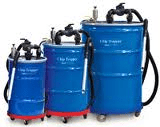
Two of our newest Industrial Housekeeping products were created from our own employees using them and seeing something that could make it better.   The easiest to see this with is our Chip Trapper System.

RDVFamily_300pxCT

Our Reversible Drum Vac Systems were around for a couple decades when someone decided to figure out a (patented) way to filter all the chips and solids out of the coolant we were processing.  So now, instead of just sucking the coolant out, we are able to filter the coolant and reuse it up to four times longer in our machines.

It is continuous improvements and being willing to listen to recommendations that make things like the Chip Trapper possible.  If you have one of our products and see a better idea, feel free to let us know, it may even be something that we could do on a custom basis for you.

Brian Farno
Application Engineer
BrianFarno@EXAIR.com
@EXAIR_BF

Video Blog: How To Clean The Heavy Duty HEPA Vac Filters

The video below showcases how to clean the filter elements on the EXAIR Heavy Duty HEPA Vac.  This vacuum is ideal for areas where personnel are working and there is fine dust particulate that may be a respiratory hazard.  All EXAIR filters are tested 100%  in strict accordance to IEST-RP-CC-007 for minimum 99.97% filtration at the 0.3 micron level to meet the HEPA standard.

Brian Farno
Application Engineer
BrianFarno@EXAIR.com
@EXAIR_BF