Class I Div 1, Groups A, B, C, and D – Explained

There are a number of hazards to be considered when using electrical equipment in areas where flammable, combustible, or explosive elements do (or might) exist.  The National Electric Cod (NEC) has a system to delineate areas by Class, Division, and Group, based on the specific nature of the hazard.  There are three Classes, each with two Divisions, and a number of Groups that may apply to each of those Divisions.  Today, we’re going to learn about Class I, Div 1, and the Groups that EXAIR HazLoc Cabinet Cooler Systems are designed for use in.

“Class I” simply means that ignitable concentrations of flammable gases, vapors, or airborne liquids can exist under normal operating conditions.  Examples of such areas include:

  • Refineries
  • Distilleries
  • Fuel storage facilities
  • Spray paint/coating booths

Now, not every single square foot of such areas have ignitable elements in the atmosphere all the time; Class I just means they can have them.  This is where the Divisions come in.

“Div 1” means that these ignitable elements can exist during normal operations, as opposed to “Div 2” which means it’s possible, but not likely.  A good example of the difference here might be a paint booth: inside a paint booth, normal operation is DEFINED as volatile liquid (paint) being discharged into the atmosphere in a spray of fine droplets – hence, that would be Class I, Div 1.  The area adjacent to the paint booth should only have that spray of fine droplets in the air if, say, the exhaust hood of the paint booth failed, or if an operator inadvertently sprayed paint outside the booth, etc…any event or condition that’s possible, but not likely – hence, that would be Div 2.

Not only are hazardous areas classified by Class (nature of the hazardous material,) and Division (likelihood of existence of it,) but they’re further delineated by the type of hazardous material, and these are sorted into Groups.  For Class I (gases, vapors or airborne liquids,) four Groups are applicable.  Materials fall into these groups (with one exception) based on two properties:

  • Maximum Experimental Safe Gap (MESG) – this is a standardized measurement of how easily a gas flame (produced by the ignition of the material) will pass through a narrow gap, bordered by heat-absorbing metal.  
  • Minimum Igniting Current (MIC) ratio, which is the ratio of the minimum electrical current required to ignite the material, by the minimum current required to ignite methane under the same conditions.

Group A is the above mentioned exception.  Because acetylene, of all hazardous materials detailed across the different groups, results in the most violent explosion when ignited, it gets a group all to itself.

Group B is for flammable gases, liquids, and vapors with a MESG less than 0.45mm, and a MIC ratio of 0.40 or less.  Hydrogen, butadiene, ethylene oxide, propylene oxide, and acrolein are popular examples of such materials.

Group C materials have a MESG less than 0.75mm and a MIC ratio less than 0.80 (but greater than 0.40, which would put it in Group B.)  Carbon monoxide, ether, hydrogen sulfide, morphline, cyclopropane, ethyl, isoprene, acetaldhyde and ethylene are some good examples.

Group D consists of all other flammable gases, vapors & liquids with MESG’s over 0.75mm and MIC ratios greater than 0.80.  Gasoline, acetone, ammonia, and benzene are common examples.  Methane is also in Group D, which gives perspective on the materials in the other Groups, which all have a fractionally lower Minimum Igniting Current than methane…the lower the MIC ratio, the lower the current needed for ignition, and therefore, the placement in a more restrictive Group.

EXAIR HazLoc Cabinet Cooler Systems are engineered and approved for use in Class I, Div 1, Groups A, B, C, or D environments.  If you have an electrical panel that needs heat protection in such an area, give me a call.

Russ Bowman
Application Engineer
EXAIR Corporation
Visit us on the Web
Follow me on Twitter
Like us on Facebook

Enjoy this Summer by Avoiding Heat Related Electrical Problems with Cabinet Cooler® Systems

For many of us, summer contains some of the most enjoyable months coming up in North America. Summer typically brings more time spent outside, basking in the sunshine, lemonade, iced tea, grilling, gardening, fishing, hiking etc.

These enjoyable hot summer months coming upon us can also bring some elevated temperatures within electric control panels – but we have a simple and effective solution to avoid any heat related shutdowns and interference with electrical systems.  EXAIR can eliminate these with our Cabinet Cooler Systems, you just get on with the grilling and basking in the sun.

With freon based coolers, higher ambient conditions make them less effective; and opening the electrical panel to have a fan blow inside creates a dangerous electrical hazard.  For every 10 oC rise above the operational temperature, the life of an electrical component is cut in half.  To reduce loss in production and premature equipment failures, it is important to keep your electrical mechanisms cool.  The EXAIR Cabinet Coolers are designed to do just that.

How the EXAIR Cabinet Cooler System Works

How does the Cabinet Cooler work? 

Cabinet Coolers are powered by an EXAIR Vortex Tube which only uses compressed air to generate cold air.  They do not have any moving parts, Freon to leak, or refrigerant compressors to fail.  These simple, but effective, cooling devices can be used in the toughest of environments.  With the Vortex Tube as the “engine”, the reliability of the EXAIR Cabinet Cooler is unmatched and makes it an easy choice for cooling electrical panels.

What NEMA ratings does EXAIR offer? 

To match the same integrity as your electrical panels, EXAIR offers three different types of NEMA ratings that are UL listed and CE compliant.  NEMA 12 is dust and oil tight, and can be related to the IEC standard, IP54.  NEMA 4 is dust and oil tight as well as splash resistant for indoor and outdoor use.  The NEMA 4X is the same as the NEMA 4 except it is made of stainless steel for corrosive areas and aggressive wash-down environments.  Both the NEMA 4 and 4x corresponds to an IP66 rating.  EXAIR Cabinet Coolers are easily installed and can match your electrical panel to keep the electrical components safe inside.

What size Cabinet Cooler do I need? 

EXAIR makes it easy to get the proper cooling with the Cabinet Cooler Sizing Guide.  This guide goes over the important information to determine the external and internal heat loads.  It also indicates the proper NEMA type and electrical requirements for easy installation. The cooling power ranges from 275 BTU/hr to 5,600 BTU/hr, and with the filled-out form, we can make sure that the correct model is used.

Thermostat- Controlled System

What types of systems are offered? 

EXAIR offers a continuous operating system and a thermostat-controlled system.  The continuous operating system includes the selected Cabinet Cooler, a filter, and a cold air distribution kit.  The system will continuously cool until it is manually or automatically turned off.

The thermostat-controlled system is the most efficient way to operate a Cabinet Cooler.  This system comes with the selected Cabinet Cooler, filter, cold air distribution kit, a thermostat and an electrical solenoid valve.  The system is designed to operate only when cooling is needed.  The thermostat controls a solenoid valve, and it is preset at 95°F (35°C).  The thermostat can be easily adjusted to match other desired temperatures.  The solenoid valves come in three different voltages, 120Vac, 240Vac, and 24Vdc (which ever voltage is easily accessible).  With the thermostat-controlled system, you do not have worry about the system operating during off-peak conditions or cooler seasons.

EXAIR NEMA 4X 316SS Cabinet Cooler System with Electronic Temperature Control installed on control panel in a pharmaceutical plant.

What other options does EXAIR offer with the Cabinet Cooler Systems? 

For better temperature control, EXAIR can replace the standard thermostat and solenoid valve with the ETC, or Electronic Temperature Control.  It is a digital temperature controller with a LED screen for precision monitoring and adjusting.  The controller has easy-to-use buttons to raise or lower the desired internal cabinet temperature.  Once set, the ETC will hold the temperature to +/- 1 oF (+/- 0.5 oC).  The LED displays the internal temperature for continuous monitoring.  The ETC comes complete with the controller and a solenoid valve in two different voltages, 120Vac and 240Vac.  The ETC is a great option for real-time accurate measurements for your panel cooling.

Another option that EXAIR offers is the Side Mount Kit.  They are used to mount the Cabinet Coolers on the side of the electrical panel.  They are manufactured to match the NEMA rating of the Cabinet Cooler.  If you have limited space, don’t worry.  The Side Mount Kits gives you more areas to mount the Cabinet Cooler to your electrical panel.

What about harsh environments? 

  • With elevated ambient temperatures like near ovens, the high temperature version would be your option. The HT Cabinet Coolers work in temperatures from 125 oF to 200 oF (52 oC to 93 oC respectively).  With refrigerant coolers, the elevated temperatures make it very difficult to cool effectively.  But with the EXAIR HT Cabinet Coolers, the high temperature will not affect the ability to blow cool air.
  • If the environment is extremely dirty with lint, fibers, debris, etc., EXAIR offers an NHP, or Non-Hazardous Purge, version. The solenoid valve is designed to allow 1 SCFM of compressed air into the panel to keep a slight positive pressure. With the NHP Cabinet Coolers, the ingress of any fine particles into your electrical panels are eliminated.
  • For food and beverage, pharmaceutical, and corrosive type of applications, EXAIR can offer NEMA 4X Cabinet Coolers made from 316SS material. With the high corrosion resistance, the 316SS Cabinet Coolers will continue to operate without degrading in tough environments.
  • In Class I, Class II, and Class III hazardous areas, EXAIR has the HazLoc Cabinet Coolers. They are UL classified and can work with X-type and Z-type purge systems for the thermostat-controlled system.  The solenoid valves are also designed to be located in these areas with the same three different voltages.  The Hazloc Cabinet Coolers can be sold as a continuous operating system as well.

    Model 7929 EXAIR AC Sensor – FREE to end user customers when purchasing ANY EXAIR Cabinet Cooler System

Electrical shutdowns are expensive and annoying.  If you have interruptions from high internal temperatures, EXAIR Cabinet Coolers are a great solution.  They can be installed quickly and easily.  With no moving parts or costly preventative maintenance needed, they can operate for decades in keeping your electronics cool.  For our U.S. and Canadian customers, we are offering a promotion.  You will receive an AC Sensor, a $58.00 value, for free as a promotional item from now until the end of August 2020 with a qualified purchase.  How can you not give them a try?  If you have any questions about Cabinet Coolers or the Sizing Guide, you can contact an Application Engineer at EXAIR.  We will be happy to help.

John Ball
Application Engineer
Email: johnball@exair.com
Twitter: @EXAIR_jb

Temperature Fluctuations Damage Control Panels. EXAIR’s Cabinet Coolers are Here to Save the Day!

It’s a longstanding joke for anyone that lives in the Cincinnati area that we can experience all (4) seasons in less than a week. This past weekend, we topped out at a high temperature of 83°F. This morning when I left the house it was a cool, crisp 37°F. With temperatures later on this week dropping below freezing, we’ve gone from the heat of summer to the cold of winter all in less than a week. These uncertain temperature fluctuations create all sorts of problems for farmers and home gardeners (like myself) as we struggle with determining the best time to plant (and rushing to cover up anything that’s already been planted!). Additionally, extreme temperature fluctuations can also cause significant issues for the electrical panels in your facility.

cc fan
Don’t open your panels to dirt and dust!

During times of high heat, the temperatures inside of these enclosures can reach dangerous levels. The use of fans, or worse opening the panel door, does help to keep the temperature down. But this can create even more issues. When using a fan or opening the panel door, you expose the sensitive internal electronics to any dirt, dust, debris, and even moisture from the ambient environment. Fortunately, maintaining a safe temperature and clean environment inside of your enclosure is simple.

cchowani

EXAIR’s Cabinet Cooler Systems were designed specifically to rectify these issues within your facility. Utilizing Vortex Tube technology, the Cabinet Cooler produces cold air from an ordinary supply of compressed air. This cold air keeps the enclosure free of debris and moisture and is easily installed in minutes through a standard electrical knockout. The Cabinet Cooler Systems are available in Aluminum, 303 Stainless Steel, and 316 Stainless Steel construction with Nema 4 (IP66) ratings. We also have Nema 12 (IP54) rated Cabinet Coolers that are available constructed of Stainless Steel. For systems that are not able to be mounted on top of the cabinet, we also have Side Mount Kits available in Aluminum, 303 Stainless, and 316 Stainless.

These systems are available with cooling capacities of anywhere from 275-5,600 Btu/hr. To make things much easier for you, we offer a Cabinet Cooler Sizing Guide that will allow us to recommend the most suitable model for your cabinet. With a few quick measurements, we’ll be able to determine the exact heat load that we’ll need to dissipate and offer you a quick and easy solution. If you’re experiencing heat related issues somewhere within your facility or remember the troubles that they caused you last year, contact an Application Engineer today and we’ll see to it that this summer your cabinets remain cool!

Tyler Daniel
Application Engineer
E-mail: TylerDaniel@EXAIR.com
Twitter: @EXAIR_TD

EXAIR Cabinet Cooler Systems – How Do they Work?

Cabinet Cooler systems eliminate heat related problems by providing a temperature controlled environment inside of electrical enclosures. Typically set to maintain 95F (but also adjustable) a Cabinet Cooler system can withstand harsh, remote environments with little maintenance. They cool heat loads up to 5600 Btu/Hr and are UL listed to maintain your cabinet’s NEMA integrity. 

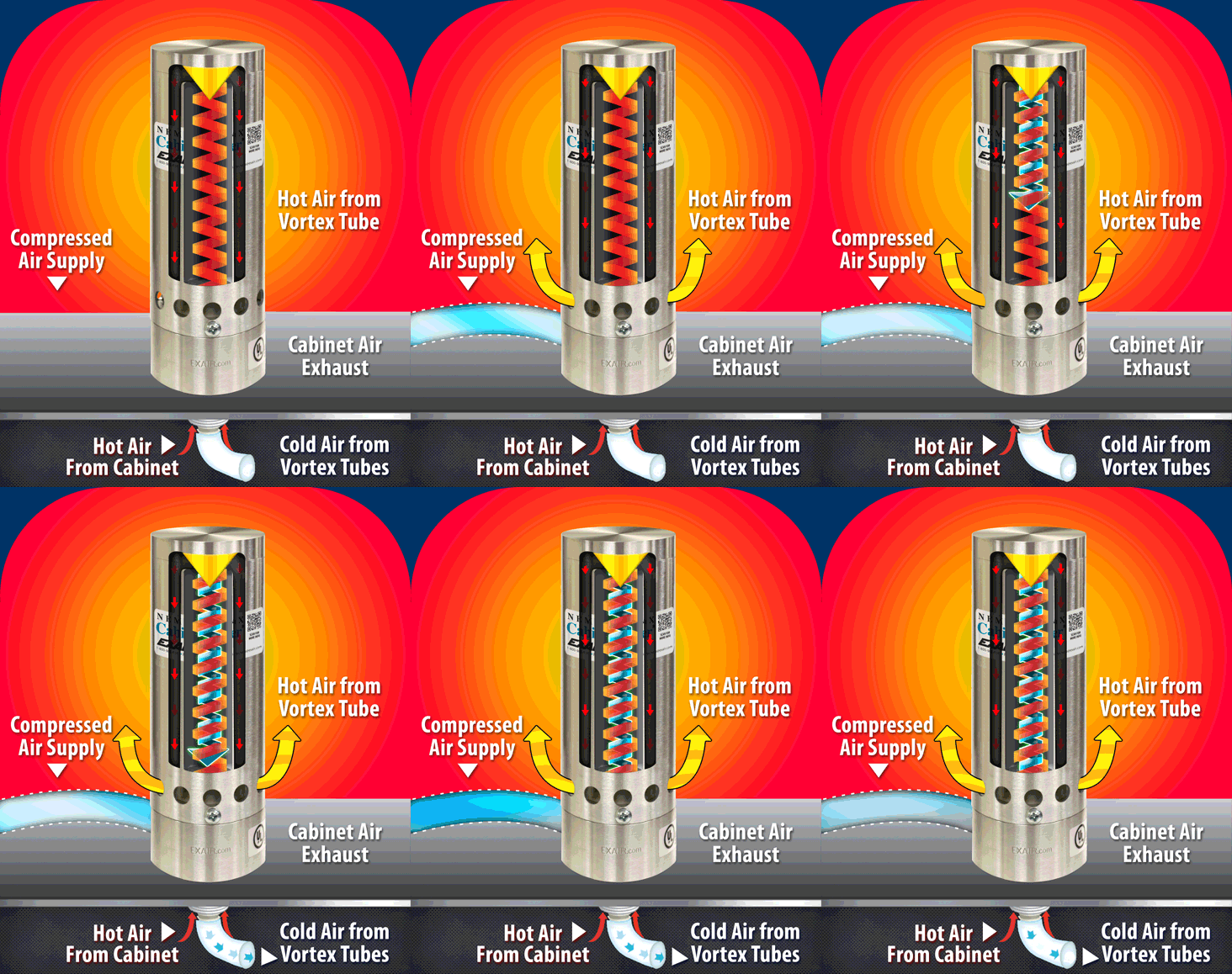
Compressed air enters the vortex tube powered Cabinet Cooler and is converted into two streams, one hot and one cold. Hot air from the vortex tube is muffled and exhausted through the vortex tube exhaust. The cold air is discharged into the cabinet through the included cold air distribution kit. The displaced hot air in the cabinet rises and exhausts to atmosphere through the cabinet cooler body. The control cabinet is both cooled and purged with cool, clean air. Outside air is never able to enter the control panel.

sl17_Nema4
How it works! 

EXAIR’s compressed air operated, Cabinet Cooler Systems are a low cost, reliable way to cool and purge electronic control panels. There are no moving parts to wear out and no filters to replace, eliminating the need for constant monitoring.

NEMA Type 12 (IP54) and NEMA 4 and 4X (IP66) models are available that are very compact and mount in just minutes through an ordinary electrical knockout.

Cabinet Cooler Family
EXAIR Cabinet Cooler Sizes 

Available in a wide range of cooling capacities, ranging from 275 Btu/hr. for our smallest system, up to 5,600 Btu/hr. for our largest Dual System.

Thermostat control systems are the most efficient way to operate a Cabinet Cooler as they limit compressed air use by operating only when the temperature inside the enclosure approaches critical levels. Continuous Operating Systems are recommend when constant cooling and constant positive pressure inside the panel is required.

Thermostat controlled Cabinet Cooler Systems are the best option when experiencing fluctuating heat loads caused by environment or seasonal changes. Thermostatically Controlled Systems include a Cabinet Cooler, adjustable thermostat, solenoid valve, cold air distribution kit consisting of tubing and self adhesive clips to duct the cold air inside the panel and a filter separator to remove any water or contaminants from the supply.

Thermostat and ETC

If you would like to discuss our cabinet cooler systems or any of EXAIR’s engineered solutions, I would enjoy hearing from you…give me a call.

Jordan Shouse
Application Engineer
Send me an email
Find us on the Web 
Like us on FacebookTwitter: @EXAIR_JS