Compressed air is used to operate pneumatic systems within a facility, and it can be separated into three categories; the supply side, the demand side, and the distribution system. In this blog, I will cover each area.
The supply side is the air compressor, after-cooler, dryer, and receiver tank that produce and treat the compressed air. They are generally located in a compressor room somewhere in the corner of the plant. There are two main types of air compressors: positive displacement and dynamic. The core component of most air compressors is an electric motor that spins a shaft. Positive displacement uses the energy from the motor and the shaft to change volume in an area, like a piston in a reciprocating air compressor or like rotors in a rotary air compressor. The dynamic types use the energy from the motor and the shaft to create a velocity with an impeller like centrifugal air compressors. This velocity converts to a rise in pressure.
How do they work? Most air compressors are driven by an electric or gas motor. The motor spins a shaft to push a piston, turn a rotor, or spin a vane. At the beginning of the air compressor, we have the intake where a low pressure is generated from the displacement to bring in the surrounding ambient air. Once trapped, Boyle’s law states that when the volume decreases, the pressure increases. For the dynamic type, the velocity and design will increase the air pressure. The higher pressure will then move to a tank to be stored for pneumatic energy. The amount of power required is dependent on the pressure and the amount of air that needs to be compressed.
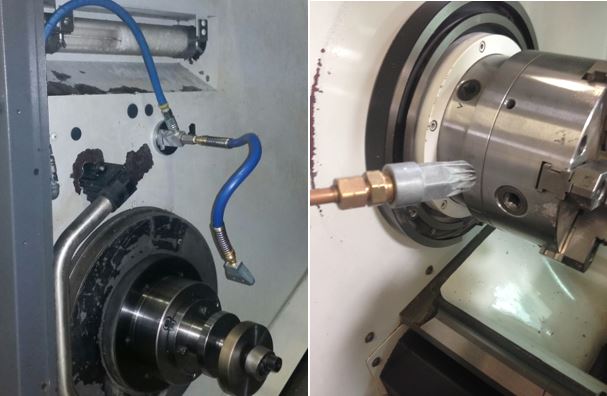
The demand side is the collection of devices that will use that compressed air to do “work”. These pneumatic components are generally scattered throughout the facility. This would include valves, cylinders, blow-offs, pneumatic clamps, etc. To condition the demand side, regulators and filters are used. The Pressure Regulators help to limit the amount of pressure. For blow-off devices, the lower the air pressure to “do the job”, the less compressed air is used. To help with the fluctuations in demand, a secondary Receiver Tank can be used. The demand side can also be a system to do specific jobs. In using pneumatic systems, the “power” must come from the supply side.
To connect the supply side to the demand side, a compressed air distribution system is required. Distribution systems are pipes which carry the compressed air from the compressor to the pneumatic devices. For a sound compressed air system, the three sections have to work together to make an effective and efficient system. An analogy that I like to use is to compare the compressed air system to an electrical system. The air compressor would be considered the voltage source, and the pneumatic devices would be considered as light bulbs. To connect the light bulbs to the voltage source, electrical wires are needed which will represent the distribution system. If the gauge of the wire is too small to supply the light bulbs, the wire will heat up and a voltage drop will occur. This heat is given off as wasted energy, and the light bulbs will be dim. The same thing happens within a compressed air system. If the piping size is too small, a pressure drop will occur. This is also wasted energy. In both types of systems, wasted energy is wasted money. One of the largest systematic problems with compressed air systems is pressure drop. With a properly designed distribution system, energy can be saved, and, in reference to my analogy above, it will keep the lights on. To have a properly designed distribution system, the pressure drop should be less than 10% from the reservoir tank to the point-of-use.

EXAIR created the “Six Steps to Optimizing Your Compressed Air System”. By following these tips, you can have the supply side, demand side, and distribution system working at peak efficiency. If you would like to reduce waste even more, EXAIR offers a variety of efficient, safe, and effective compressed air products to fit within the demand side. This will include the EXAIR Super Air Knives, Super Air Nozzles, and Safety Air Guns. This would be the electrical equivalent of changing those incandescent light bulbs into LED light bulbs. If you wish to go further in enhancing your system, an Application Engineer at EXAIR will be happy to help you.
John Ball
Application Engineer
Email: johnball@exair.com
Twitter: @EXAIR_jb