Static and Variance

Okay, folks, it is time we seriously discuss how dry it is here in the MidWest right now and how much static there is anywhere we go. The dry air is the lack of moisture due to heat being used inside facilities, and thus, the static ramps up. If you didn’t understand much of those statements then it is okay, we have a whitepaper that covers the basics. The seriousness of the static in my home has reached critical mass. We are past the funny shocks and hair standing on the end humor side of static. We have reached a critical mass where it is no longer funny, my coffee is being affected by the ambient level of static charge.

That’s right, the coffee grinder I received for Christmas is riddled with static. Now, it is still functioning, thank goodness for that. The container that houses the fresh ground, the nectar of the gods making crushed beans, is made of polycarbonate material and is prime to hold a static charge. As the dry coffee beans are ground into obliteration there is a tremendous amount of friction which causes a very high charge on the ground bean discharge that goes into a very dry non-conductive container. This means the grinds all pile up and then also cling to every single surface on the interior of the small container. That’s fine, it still does not affect the performance of the grinder. Then, when I open the lid there is a detachment that happens and a small amount of that highly charged ground bean will start to dance all over the surfaces of the container, including outside of it and onto the counter. The end result is I have to constantly wipe up coffee grinds and I am wasting the grinds that give me the caffeine I intend to consume.

The dilemma here is that I don’t want to run compressed air into my kitchen, already have one project going on in the house. Secondly, my wife would not think it would be as entertaining as I would. So, I need a non-compressed air-assisted static eliminator that can plug straight into a voltage available here in the US, and let’s face it, coffee is a global consumption so 120 VAC and 230 VAC would be preferred. Enter, the VariStat Benchtop Ionizer.

The Varistat would easily mount to the wall over my coffee generation station and could be adjusted from a gentle breeze to where it doesn’t disturb the coffee grinds all the way up to a forceful blast in case the need would arise. I could also vary the balance of the unit to meet the atmospheric and surface conditions of the container.

Okay, so I’m probably not going to buy a Varistat Benchtop Ionizer and mount it to my kitchen wall. I would easily recommend it to any kind of hopper loader or regrind operation where the static is causing the materials to cling to the containers or causing nuisance shocks. This unit is easily sat on a bench top or mounted to a wall or ceiling over a hopper or workstation. Thanks to the operation of standard 120 VAC or 230 VAC it can function nearly anywhere in the world that has electricity.

If you would like to discuss coffee, what my favorite roasts are, or more importantly how can we make this work in our building, just let me know if you have some questions and we will get back to you quickly.

Brian Farno, MBA – CCASS Application Engineer

BrianFarno@EXAIR.com
@EXAIR_BF

2” Flat Super Air Nozzle Keeps Lens Clean

camera lens1Camera lens with 1122

Many times we will be contacted by clients who provide vision inspection systems for a variety of industries. These companies are involved in applications to inspect everything from part conformance to product counting to processes to filling applications.

In the first photo above a customer had their vision inspection system set to inspect the filling of a powder material into its container. The problem is that the fine, dusty nature of the product would cause a small cloud to form near the filling point which would end up settling onto the lens area. Over time, so much build up would occur that the vision inspection system was rendered useless.

The customer had a small air jet set up as shown in the photo on the left, above. The problem with their air jet was that it did not provide full coverage across the width of the lens and allowed dust to still settle there. You can see it in the photo. After the customer contacted us and described the situation and the size of their lens, we recommended model 1122 2” Flat Super Air Nozzle with the thinnest shim available which is .005” thick.  The 2″ Flat Super Air Nozzle was able to provide an airflow that covered the full diameter of the lens and blast any debris away. In the end, they removed the homemade small air jet assembly and simply blew air across the lens with EXAIR’s nozzle. See photo on the right above.

Vision inspection cameras, lasers, and sensors are found in a variety of dusty and messy environments. Inspection systems on filling lines, sawing applications, weighing machines and grinding applications are just some of the notoriously problematic processes. If you are involved in a process that has trouble keeping the vision inspection lenses clean, the 2” Flat Super Air Nozzle is a great way to mount an engineered solution that won’t run you out of house and home on your compressed air usage. And best of all, it actually does a good job. If your application is slightly bigger, smaller, dirtier etc., EXAIR’s unmatched selection of nozzle and blowoff products can likely provide a solution.

Neal Raker, Application Engineer
nealraker@exair.com

Outside Your Comfort Zone?

Over the past several months I have found myself more and more outside of my comfort zone throughout the day.  This feeling has been declining over the past few months, however, as the situations which cause discomfort seem to come up more and more every day so my comfort zone is constantly expanding. I like comfort zones, but also understand that being outside of them helps me to learn and gain new experience. I bring this up because I had a customer come in yesterday so they could be shown a demonstration of an EXAIR Super Air Knife.

Now, customers coming in is not a problem at all, I spoke with him last week and we discussed the application.  This time, it was outside of his comfort zone so he wanted to come in.  Well, when I got the call I had a visitor I grabbed a single business card and walk out to find that there were four gentlemen waiting to see me, not just one.  Still, not a problem. I showed them to our fully stocked demo room and we proceeded to discuss their application.  They were hoping to make the environment their employees work in a little cleaner.  They had new down draft work benches which had three sides on it.

The problem the team was having is that all their operators were using hand-held grinders to deburr parts as they were manufactured.   The downdraft table was added to help prevent the dust and debris from getting all over the operators, however it wasn’t working good enough.  So they started looking and found EXAIR Super Air Knives.  They didn’t believe that a Super Air Knife would move enough air and still be quiet enough to have an operator sitting at the station, so they drove down to our facility and I showed them all the benefits that a Super Air Knife has.  This was all based off a 6″ Aluminum Super Air Knife I had handy.  I then swapped the stock .002″ thick shim out with a .001″ thick shim.  They were amazed at how quiet the Super Air Knife was (with either shim) and how the flow of air was enough to disturb and direct dust but not over powering and blowing parts off the table. LSAN I could definitely see that they were impressed by the simplicity of working with the Super Air Knife and the performance it achieved. But alas, they were still trying to figure out how a 48″ would work, so I went straight out and got a 110048 off the shelf and hooked it up for them.  That was all that they needed in order to really get the wheels in their heads spinning into overdrive.   They all left with my contact information and catalogs in tow but I didn’t hear them stop talking about the possibilities until they were in the car.

The fact of the matter is that they were outside of their comfort zone and had no concept of how you could make compressed air blow in a laminar sheet to help contain dust in a down draft work bench.  Once they saw how easy the Super Air Knife was to hook up and mount they were instantly back into their comfort zone of making their employees happy and safe. If you have some applications using compressed air and you are well out of your zone, contact us.

Brian Farno
Application Engineer
BrianFarno@EXAIR.com
@EXAIR_BF

How Could EXAIR Help With The Olympics?

With the Winder Olympics now officially underway I have been trying to figure out just how EXAIR could be a part of the process.  Maybe not in the forefront, but what are some applications that are there and have potential for being done by or improved by an EXAIR product.

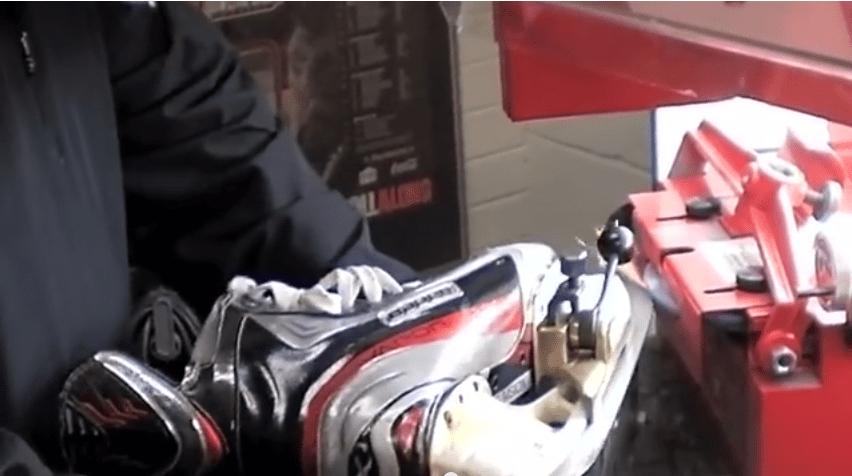
The first even/ sport I thought of was Hockey.  When a skate is sharpened they generally do a dry grinding stone.  This can heat up the blade and cause it to become brittle.   The best way EXAIR can help is to offer a Cold Gun or a Mini Spot Cooler to apply a cold dry air to the grinding point and keep both the material and the stone cool to offer maximum tool life as well as a finer finish on the blade.  (This could probably be used in figure skating too but we’ll stick to hockey for this example.)

Skate Sharpening

5315_SCGdual

The second point was during any of the celebratory events where confetti is dispensed an EXAIR Line Vac or a Super Air Amplifier to help dispense the confetti.  We showcase how well this works in one of the Professor Penurious videos.

willitlaunch

The final would be the best in my opinion which is to use a Line Vac for a T-Shirt Cannon.  Which would help to spread the promotional items in the common areas. We have customers who build awesome t-shirt cannons used at sporting events, I’m just not sure they get the crowd that hyped up within the curling stadium.

ss lv

So whether you are in the Olympics or simply trying to make some parts for a customer we probably have a product that can help.  Feel free to contact us and find out how.

Brian Farno
Application Engineer
BrianFarno@EXAIR.com
@EXAIR_BF