Why 5 PSIG Matters

Last week I pointed out the important locations for measuring your compressed air system pressure throughout your compressed air system.   One of the critical points to measure system pressure was before and after each filter.  This leads into another question that I receive every once in a while, “How do I tell when the filter needs to be changed?”  The answer to this is easy, when you see more than a 5 PSIG pressure drop across the filter.  This means that the element within the filter has become clogged with sediment or debris and is restricting the volume available to your downstream products.

Filter
EXAIR 5 micron Auto Drain Filter Separator


This can lead to decreased performance, downtime, and even the possibility of passing contaminants through the filter to downstream point of use components.  In order to maintain an optimal performance when using EXAIR filter separators and oil removal filters, monitoring the compressed air pressure before and after the unit is ideal.

Replacement filter elements are readily available from stock, as well as complete rebuild kits for the filter units. Changing the filters out can be done fairly easily and we even offer a video of how to do it.

The life expectancy of a filter element on the compressed air is directly related to the quality of air and the frequency of use, meaning it can vary greatly.  If you tie a new filter onto the end of a compressed air drop that has not been used in years, you may get a surprise by the filter clogging rather quickly.   However, if you maintain your compressor and your piping system properly then the filters should last a long time. Generally we recommend checking your filters every 6 months.

If you have questions about where and why to filter your compressed air contact us.

Brian Farno
Application Engineer
BrianFarno@EXAIR.com
@EXAIR_BF


Video Blog: Effectiveness of Filtering Your Compressed Air

The video below will give a brief demonstration on the importance of point of use filtration in order to remove unwanted material such as water, scale, particulate and oil from your compressed air stream. Point of use or end-use filtration will keep your air clean and your compressed air products running smooth.  If you have any comments or questions, please feel free to contact us.


Brian Farno
Application Engineer
BrianFarno@EXAIR.com
@EXAIR_BF

Dirty Compressed Air Consequences Are Avoidable

I would like to discuss the importance of clean and dry filtered air.  This all comes from some discussions I have had with customers over my time here at EXAIR, as well as from my time in the machine tool industry. It is notable to state that we simply ask for clean/dry air to run through our products, not “instrument” or “process” air which is typically held at a different pressure, temperature, or volume and can be more expensive to generate. All of EXAIR’s products use general plant air and can be cleaned up with simple point of use filters.

Clean and dry compressed air is essential for ensuring a long and easy life of almost any compressed air product.   One product in particular that I have some data on is the EXAIR Line Vac.  The pictures below show the inside wall of a Stainless Steel Line Vac.  This unit was used in a harsh outdoor environment.   The compressor was not maintained and did not have any form of filtration on the lines feeding the Line Vac unit. The first picture shows where all the dirt and particulate were impacting the internal generator wall as it entered the air chamber.

Damaged Generator

The two dark grey marks are actually the impact points on the unit.   There is only one air inlet on the Line Vac, this means that the unit was taken apart during the two months and actually inspected then put back together and the generator was rotated slightly during this process.  These spots are similar to what sandblasting does to metal, just to illustrate how much particulate was in the air stream. Since the air has not yet reached its full velocity within the Line Vac, it has left only those visible surface blemishes.

As the air begins to exit the array of small generator holes it begins to rapidly increase in velocity while it is trying to expand to atmospheric conditions.  Because of this increased velocity, the wear the generator holes experience is greater and as seen below it is causing some extreme wear.

Worn Generator Holes

To give you an idea of what a new generator should look like is below. Here you can see uniform holes that go precisely through the generator.

IMG_4283

To prevent a disaster like this from happening to your end-use compressed air products, all you need are some simple, low maintenance filters.   EXAIR offers dirt / water filter separators that will filter your compressed down to 5 micron particulate size.   The will catch the good majority of rust, water, and dirt within your compressed air system.   Then you can also install an oil removal filter which will filter all oils and particulate out of your compressed air system down to 0.03 micron particulate level.

Each of these units are great point of use filtration to keep any of your processes from experiencing what this Line Vac experienced.   If you have any questions about the quality of your compressed air or why you are seeing failures in product on your compressed air system, contact us.

Brian Farno
Application Engineer
BrianFarno@EXAIR.com
@EXAIR_BF

Spills & The Not So Easy Way To Clean Them Up

Before I worked for EXAIR, I worked for a CNC manufacturer/ distributor here in Cincinnati.  We would constantly have machines in our showroom filled with cutting fluid and running demonstrations, training or test cuts for our customers.  The bad part was that these never happened in the same week, sometimes not even in the same month.  So to keep the machines clean we would have to empty the coolant after we were done.   The way we would always do this was with the EXAIR Reversible Drum Vac.

RDVFamily_300px

Our unit was not exactly treated with the utmost respect.  It would get thrown on a shelf or in a drawer of a tool box for weeks on end, taken to shows, on customer visits, and even left on a drum full of coolant.  The best part is that it always worked.  The unit we had, was over ten years old when I worked there and I had been with them for 5 years, it had never needed any service.   No matter what we did, the unit always pulled through and took up less room than a regular electric vacuum.

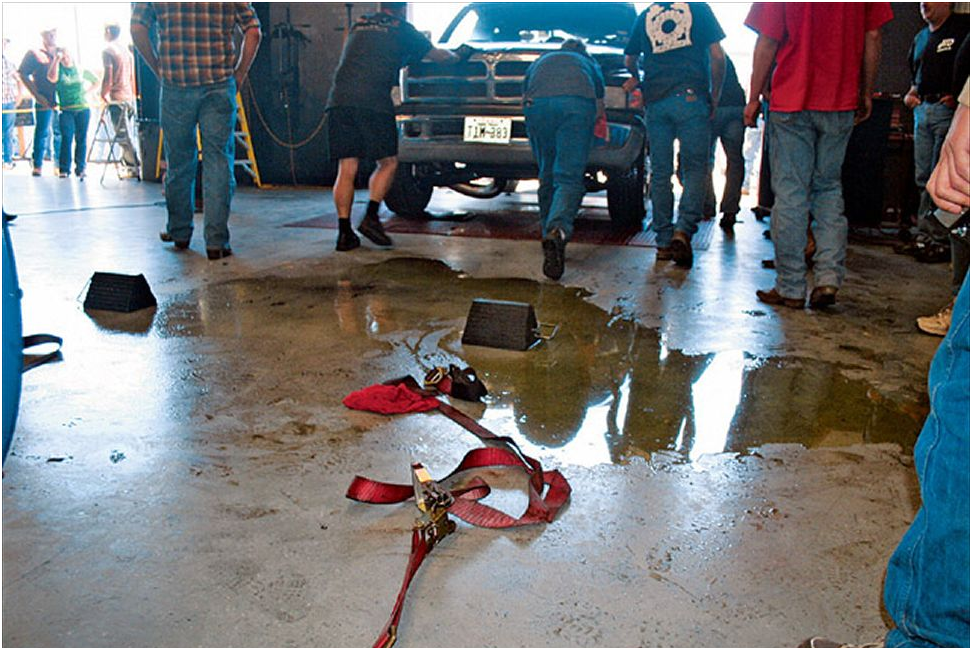
The event that sparked this chain of thoughts was a small (1 entire quart) spill of fork oil in my garage earlier this week.  As I was working on my race bike I accidentally knocked over a freshly opened quart of fork oil and didn’t notice until it was all drained right underneath of my motorcycle.   Unfortunately, I don’t have a Reversible drum Vac at home to quickly suck up the spill before it sets into the concrete so I started cleaning it with paper towels and kitty litter.   Now I have this giant pile of dusty oil soaked stuff in the middle of the garage that has been sitting for 3 days to make sure it is all absorbed.   If I had even had a Mini Reversible Drum Vac I would have been able to utilize my air compressor and suck up the spill, instead I now have an entire trash bag of mess to clean up and dispose of.

spill

This happens more often than one would think in car garages, and performance shops.   Rather than running for the kitty litter, give the EXAIR Reversible Drum Vac a test and find out how much easier it is to suck up that coolant or oil spill straight into a 5, 30, 55 or 110 gallon drum.

Brian Farno
Application Engineer
BrianFarno@EXAIR.com
@EXAIR_BF