

On a molecular level, the outer electrons surrounding the nucleus can be removed and transferred between atoms, leading to an imbalance of electrical charge known as static electricity. When an atom gains an extra electron, it becomes negatively charged, while the loss of an electron results in a positively charged atom. In non-conductive materials such as plastic, paper, rubber, and glass, these electrons cannot return to their original atoms. There are three primary methods through which static electricity can be generated, resulting in this phenomenon.
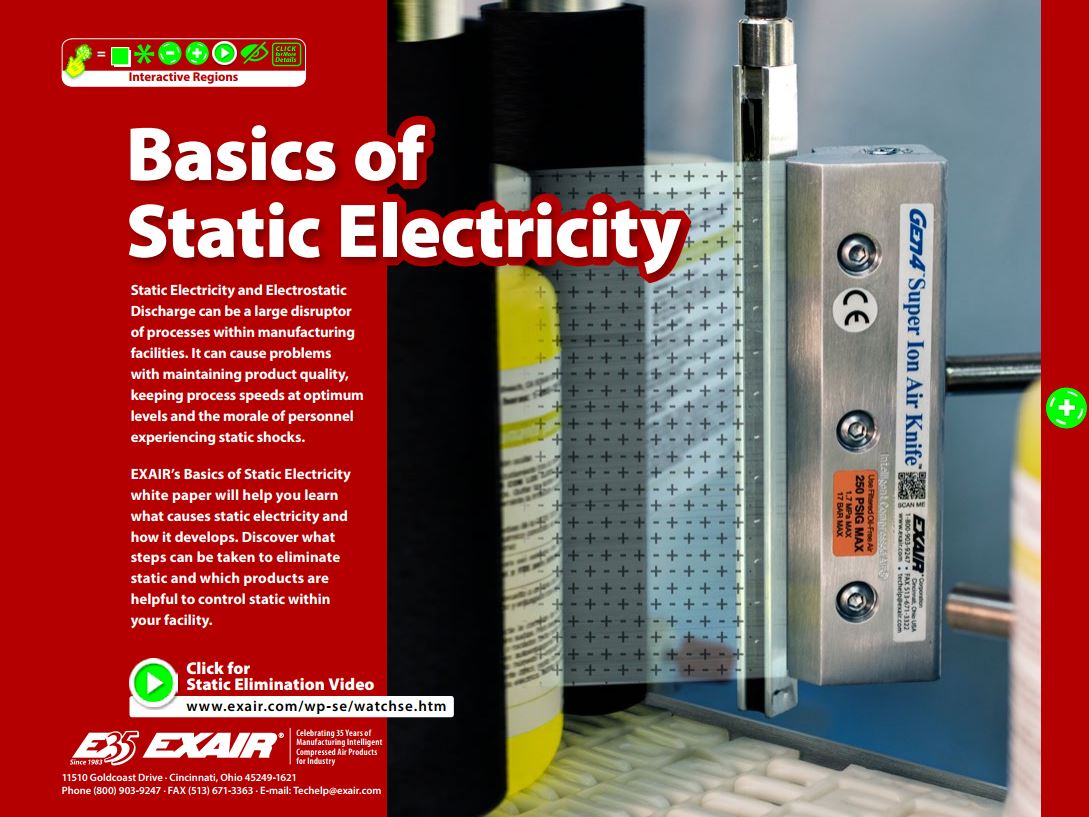
Contact — When objects collide, electrons can be transferred between their surfaces, with the amount of electrons exchanged depending on the specific triboelectric materials involved. In the case of plastic bottles or trays coming into contact on conveyor belts, static electricity can be generated quite easily.

Friction — When two materials are peeled apart, the electrons may not return to their original molecules, resulting in the creation of static electricity. This effect is especially prevalent with adhesive tapes and protective films, which possess larger surface areas that facilitate charge buildup. For example, peeling the backing from labels can generate a static charge that may malalign the labels or cause jams during the application process.
Separation — Static forces are often generated when two non-conductive surfaces are rubbed together, leading to the accumulation of electric charges. The friction created as these materials slide against each other increases the static charge, exemplified by the phenomenon observed when a balloon is rubbed on hair. With each additional rub, the static force intensifies, enabling the balloon to adhere to surfaces like walls. This effect is also evident when layers of material are stacked or when they move over rollers, highlighting the significance of friction in generating static electricity.
The generation of static electricity is influenced by the degree of contact, detachment, and friction between surfaces; increased interaction leads to a higher static charge. Even after static is discharged from a surface, it can accumulate through the same processes. Therefore, effective control of static electricity depends on both the treatment methods employed and the specific locations designated for its removal.
Humidity is another critical factor in static charge generation. Issues related to static electricity are often more pronounced during the winter months when the air tends to be drier. Lower relative humidity facilitates the easier and more potent development of static charges, which is why winter is commonly referred to as “static season.” A familiar example of this phenomenon occurs when one walks across a carpet and experiences a static shock upon touching a metal object, such as a door handle.
If you are experiencing static issues, or anything regarding EXAIR and our products, please do not hesitate to reach out. We offer a full line of Static Elimination products to suit your needs!
Jason Kirby
Application Engineer
Email: jasonkirby@exair.com
Twitter: @EXAIR_jk


